
The short answer
Your garage door is almost certainly the largest, least-reinforced opening in your home's exterior wall, and that makes it the first thing to fail when wind pressure builds during a storm. A standard double-wide door is a thin panel of steel, wood, or fiberglass held in place by tracks, rollers, and a spring system that was engineered for daily lifting, not for resisting sustained lateral force. When wind gets behind it, pushes it inward, or finds a gap and drives rain through, the door can bow, pop off its tracks, or let water into the garage and whatever's stored there. Getting it storm-ready before the wet season takes a few hours, not a remodel.
Why the garage door is the weak point
Walls built with studs, sheathing, and siding distribute wind load across a continuous surface. A garage door interrupts that surface with a large moving panel. Under strong gusts, air pressure can build up inside the garage if the door flexes or seals fail, and that internal pressure pushes outward on the roof and walls at the same time wind is pushing inward on the door itself. This back-and-forth stress is what causes panels to buckle, track brackets to pull loose from the frame, and torsion springs to take damage they weren't built for. Older doors without reinforcing struts, and doors where the track hardware was never upgraded, are the most exposed.
What this looks like locally
October through the start of the wet season is when East Contra Costa County shifts from dry, dusty offshore wind conditions to winter storm systems that bring rain and gusty wind together. That combination is harder on a garage door than either one alone: wind loosens hardware and strains seals, then rain finds every gap that wind has opened up. Homes with earthquake retrofits already have reinforced framing in places, but that retrofit work rarely touches the garage door track and header unless it was specifically addressed, so don't assume seismic bracing covers wind resistance too.
A pre-storm checklist
- Inspect the tracks and rollers. Pull the door down manually (with the opener disconnected) and look for bent track sections, loose bolts at the wall brackets, or rollers that wobble. Any looseness here is where wind-driven movement starts.
- Check the weatherstripping. Run a hand along the bottom seal and side seals. Cracked, flattened, or gapped weatherstripping lets wind-driven rain in and gives wind a place to start prying at the panel edge. Replacement seal kits are inexpensive and a reasonable DIY job if the track channel isn't damaged.
- Test the balance. Disconnect the opener and lift the door halfway by hand. It should stay in place. If it drifts up or crashes down, the springs are out of balance and the door is working harder than it should, which matters more once wind adds extra load to the system.
- Look at the panels for existing dents or flex. A panel that already bows slightly under normal handling will flex further under wind pressure and is more likely to fail at a seam.
- Add or check reinforcing struts. Horizontal struts bolted across the back of the panels stiffen the door against wind load. Many standard residential doors don't come with them installed; retrofitting struts is one of the most effective single upgrades for wind resistance.
- Confirm the opener has battery backup or a manual release you can reach. Storms often bring power outages, and you want the ability to open or close the door by hand if needed.
The trade-offs worth knowing
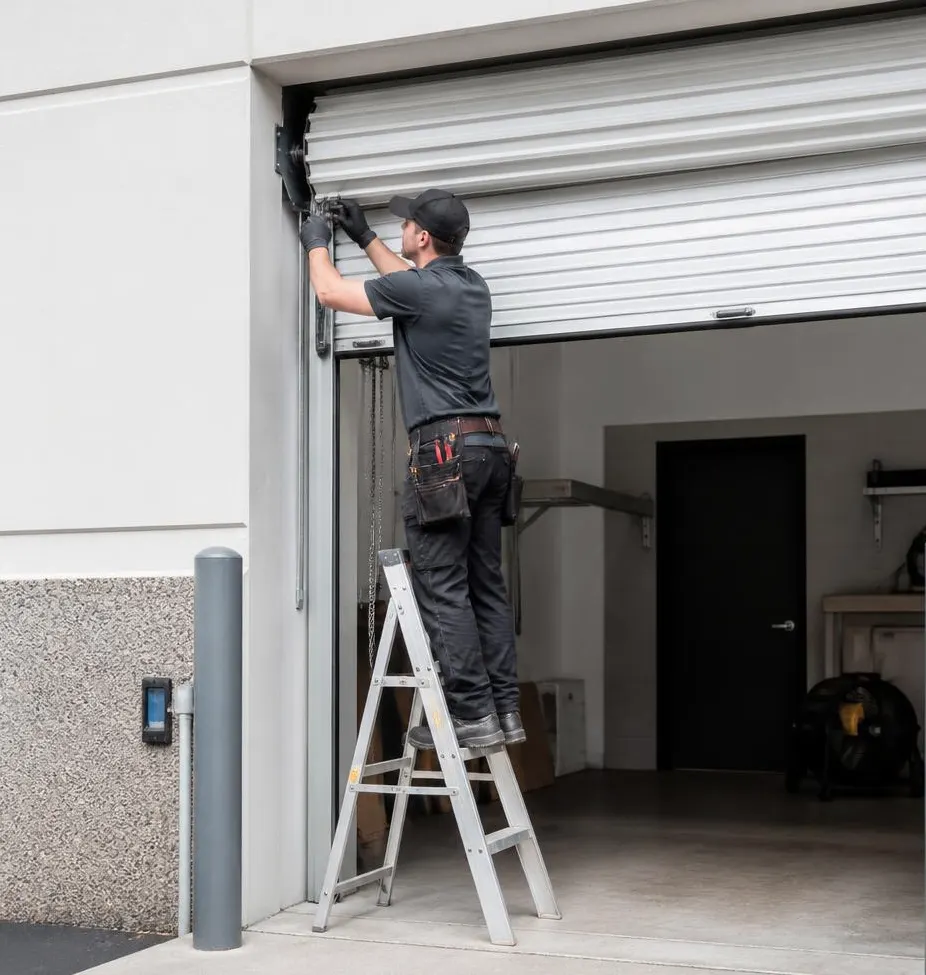
Weatherstripping and basic hardware tightening are low-cost DIY jobs. Reinforcing struts, track bracket upgrades, or replacing an aging spring system take more mechanical know-how and carry real injury risk if the spring is under tension, so those are better left to a technician. A full wind-rated door replacement costs more upfront (national ranges for garage door replacement typically run from the low thousands to several thousand dollars depending on material and size) but is worth considering if your current door is already dented, misaligned, or original to an older home.
When to call Antioch Garage Door Pro
If your door is out of balance, the track hardware is loose, or you're not sure the springs can handle another storm season, that's the point to call in a professional rather than keep adjusting it yourself. Antioch Garage Door Pro's Garage Door Maintenance service covers a full inspection of tracks, rollers, and seals before the rainy season hits, and our Spring Replacement service addresses worn or mismatched springs before they fail under added wind load, which is a much safer and cheaper fix than dealing with a door that's come off its tracks mid-storm.
If you're in Antioch, Brentwood, Oakley, Pittsburg, Bay Point, Concord, Discovery Bay, or Martinez and want your garage door checked before the next storm rolls through, call Antioch Garage Door Pro today and get it handled before the wind does.